




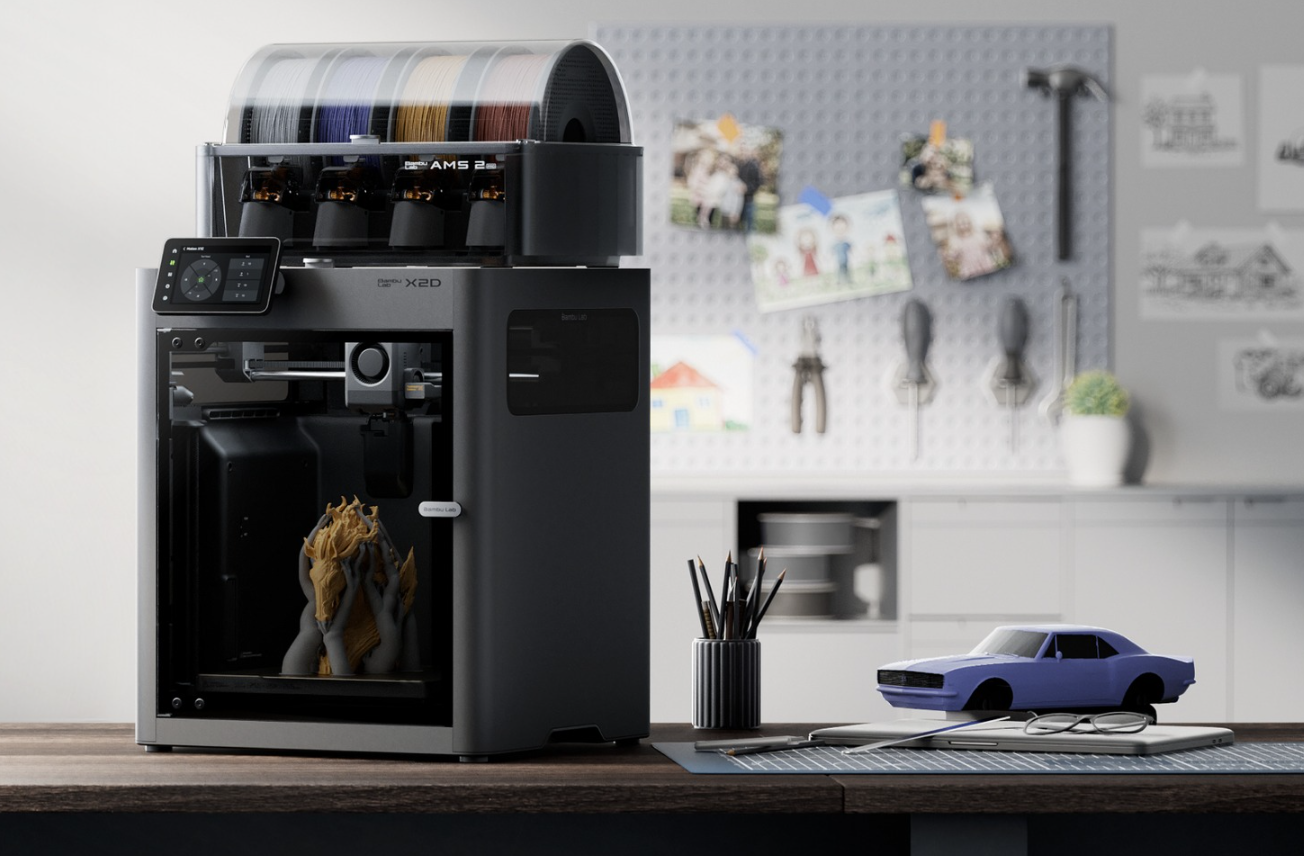
The arrival of Bambu Lab is undeniably one of those moments. Founded by a team of engineers with a background in high-performance drones and gimbal technology, Bambu Lab entered the market not just to compete, but to fundamentally disrupt.
Before their arrival, 3D printing was often viewed as a hobby that required as much time spent on maintenance and “tinkering” as it did on actual creation. Bambu Lab changed that narrative by introducing a ecosystem where high speed, aesthetic design, and “out-of-the-box” reliability coexist. They have effectively taken the 3D printer from a niche workbench tool and transformed it into a sophisticated household appliance.
The Core Philosophy: Speed Without Compromise
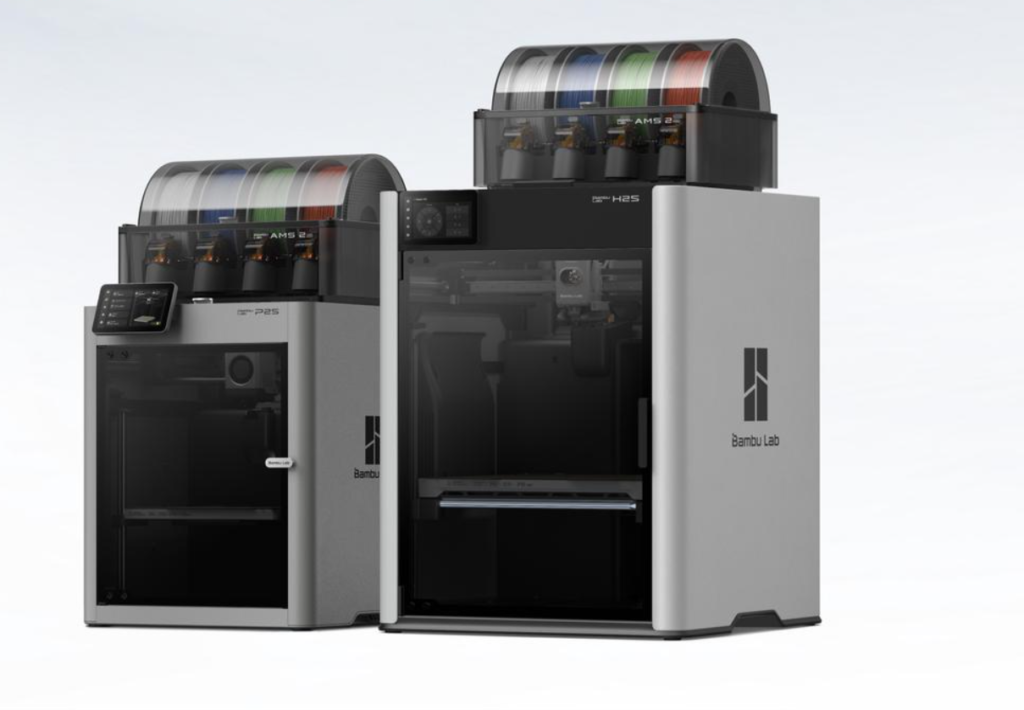
The most immediate impact of a Bambu Lab machine is its sheer velocity. By utilizing advanced motion control algorithms and a robust CoreXY architecture, their printers can achieve speeds of up to 500mm/s and accelerations of 20,000mm/s². However, speed is meaningless if it results in a failed print or poor surface quality.
Bambu Lab solved this through the integration of cutting-edge sensors and AI. Their flagship machines utilize a Micro LiDAR sensor that measures nozzle height, calibrates flow, and even scans the first layer for defects. Combined with active vibration compensation (input shaping), the printers can move at breakneck speeds while maintaining the precision required for functional engineering parts and intricate artistic models. It is this “hands-off” approach to calibration that has lowered the barrier to entry for millions of new creators.
A Portfolio of Innovation: From the A1 to the X1-Carbon

Bambu Lab has meticulously curated a hardware lineup that caters to everyone from the curious beginner to the professional engineer. Their ecosystem is built on a “tiered” approach, ensuring that regardless of price point, the user experience remains premium.
- The X1-Carbon (The Flagship): This is the machine that started the revolution. Featuring a carbon fiber X-axis, a fully enclosed chamber, and a high-temperature nozzle, it is designed to print advanced engineering materials like carbon-fiber reinforced nylon (PA-CF) and polycarbonate.
- The P1 Series (The Performance Workhorse): Taking the core mechanics of the X1 but stripping away the advanced AI and LiDAR features, the P1P and P1S offer the same blistering speed at a more accessible price point for those who prioritize raw throughput.
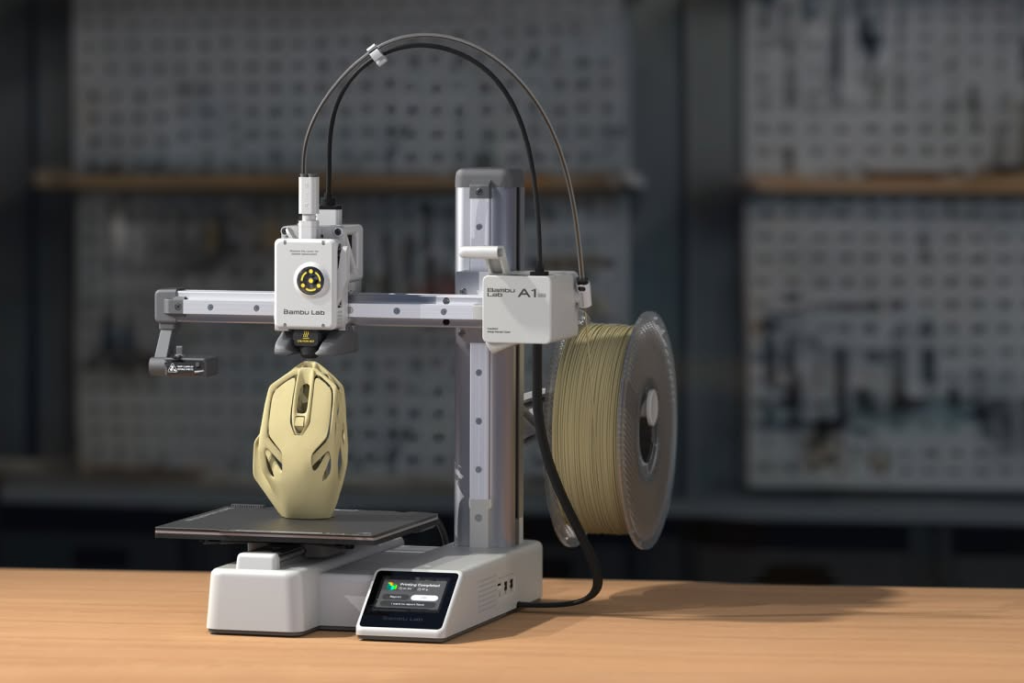
- The A1 and A1 Mini (The Entry Point): By reinventing the “bedslinger” style printer with active flow-rate compensation and a tool-less nozzle swap system, Bambu Lab brought high-quality 3D printing to the masses, proving that “entry-level” doesn’t have to mean “low-tech.”
- The AMS (Automatic Material System): Perhaps their most significant innovation is the AMS. This peripheral allows the printer to automatically switch between four different filaments, enabling multi-color printing and the use of specialized support materials that break away cleanly, leaving a perfect surface finish.
- Bambu Studio & Handy: The software ecosystem is the glue that holds the hardware together. With a seamless cloud-based workflow, users can start a print from their smartphone, monitor it via a built-in camera, and receive AI-driven notifications if a problem is detected.
Ecosystem Integration: MakerWorld and Beyond
Bambu Lab understood early on that a great printer is only useful if you have great things to print. This led to the creation of MakerWorld, a community-driven 3D model platform that is deeply integrated with the hardware.
Unlike traditional file-sharing sites, MakerWorld allows for “one-click printing.” Because the platform knows exactly which printer and filament the user is using, it can provide pre-configured print profiles. This eliminates the need for users to understand complex “slicing” parameters, making the transition from a digital idea to a physical object nearly instantaneous. This commitment to a “walled garden” that actually empowers the user rather than restricting them has set a new standard for the industry.
Sustainability and the Future of Manufacturing

Beyond the hardware, Bambu Lab is looking at the long-term impact of 3D printing. By making the process faster and more reliable, they are enabling a shift toward “on-demand” local manufacturing. This reduces the carbon footprint associated with global shipping and overproduction. Their printers are also designed with energy efficiency in mind, and the brand continues to expand its range of eco-friendly filaments, including those made from recycled materials and sustainable bioplastics.
The company’s rapid release cycle and constant firmware updates suggest that they are only just beginning. With rumors of larger format machines and even more advanced material capabilities on the horizon, Bambu Lab is not just reacting to the market; they are actively dictating its direction.
The New Gold Standard

Bambu Lab has succeeded because they dared to ask why 3D printing had to be difficult. They replaced manual leveling with sensors, replaced slow speeds with drone-grade motors, and replaced frustration with a “print-and-forget” reliability.
For the educator, the engineer, and the artist, the message is clear: the era of the “tinker-toy” 3D printer is over. We have entered the era of the high-performance creation engine. Whether you are prototyping a complex mechanical part or printing a colorful toy for a child, Bambu Lab provides the speed, the precision, and the joy that was previously missing from the desktop 3D printing experience.